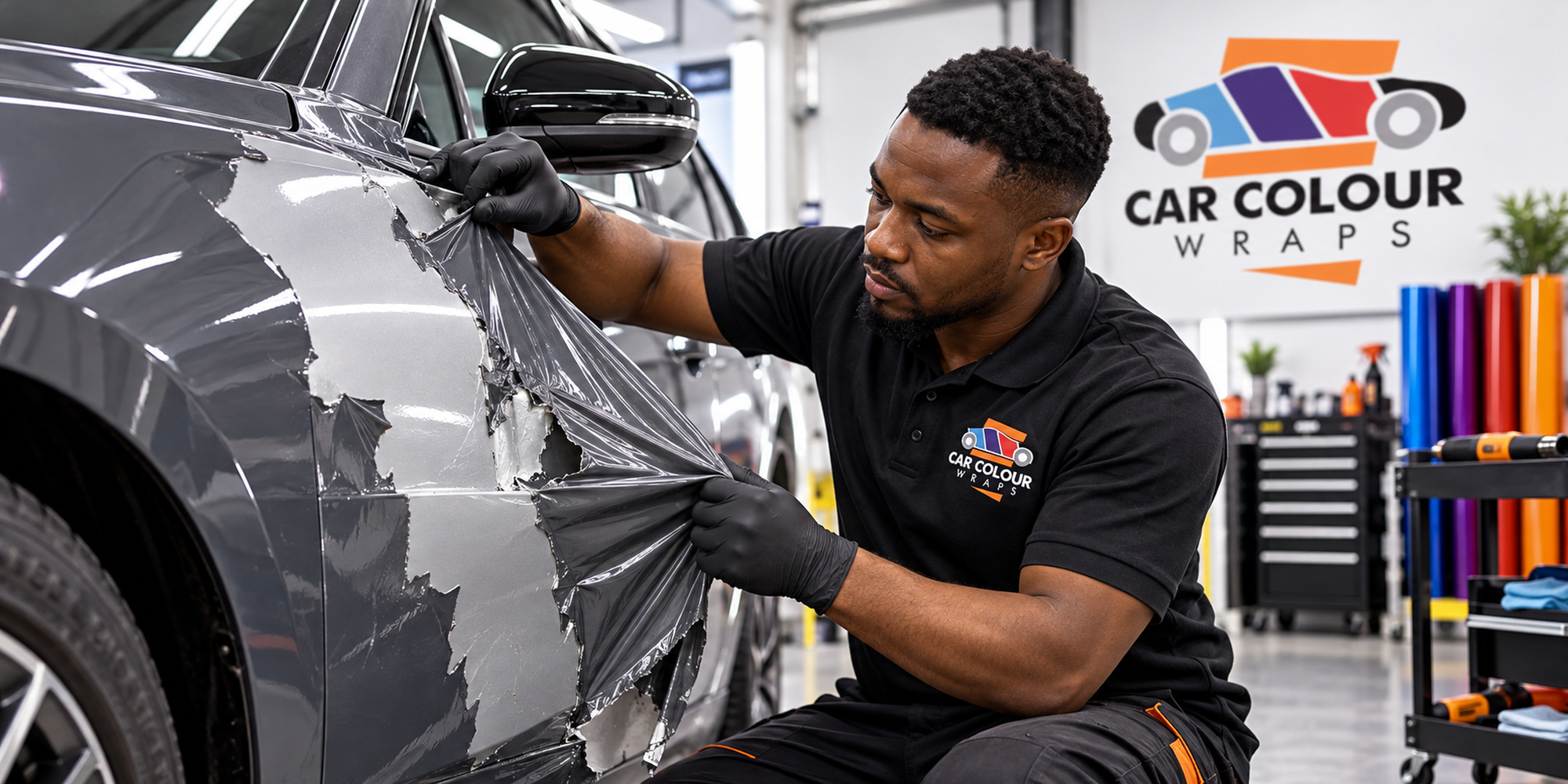
Vehicle wrap removal takes off an existing vinyl wrap or paint protection film so the vehicle can return to its paint, be rewrapped, or be prepared for sale. The aim is to remove the film steadily with controlled heat, clean off adhesive residue and leave the paint ready for inspection.
It suits owners selling a wrapped vehicle, people changing to a new colour, vehicles with old, cracked or faded film, and anyone who bought a wrapped car and wants to see what is underneath.
About this service
Removal is done with controlled heat, which softens the film and adhesive so it can be peeled back at a low angle. Well-applied quality film on healthy factory paint usually removes cleanly. Old, sun-baked or cheap film is a different story: it can become brittle and come off in small pieces, take considerably longer, and leave adhesive behind that must be cleaned off with suitable removers.
Paint condition is the biggest unknown. Factory paint that was in good health when the film went on usually comes out well. Resprayed, damaged or poorly bonded paint can lift with the film, and this is not always predictable from the outside. We assess the vehicle and test a small area first, and we tell you if we see signs of a respray or weak paint before continuing.
Once film is off, you may notice that the paint looks slightly different where it was covered compared with exposed areas, such as door shuts or edges, because the uncovered paint has aged differently. A machine polish is often recommended after removal to even out the finish and remove adhesive haze, and any chips or defects that were under the film will now be visible.
Suitable vehicles and common uses
- Colour change wraps that are being replaced with a new colour
- Faded, cracked or peeling wraps
- Wrapped vehicles being prepared for sale
- Vehicles bought second-hand with an unknown wrap history
- Old PPF that has yellowed, stained or lifted
- Partial wraps such as roofs, bonnets and mirrors
Available options
- Full vehicle wrap removal
- Partial removal of selected panels
- Paint protection film removal
- Adhesive residue cleaning after removal
- Post-removal paint polishing, if agreed
- Removal followed by a new wrap or PPF installation
Options depend on the material available at the time of your project and on your vehicle. We confirm exactly what is possible in your quotation.
Why choose it
- Controlled heat and technique to reduce the risk of paint damage
- Adhesive residue is cleaned off rather than left on the paint
- You see the true paint condition before deciding on next steps
- Panels can be prepared directly for a new wrap or PPF
- Honest assessment of resprayed or weak areas before removal starts
Things to consider
- Resprayed, damaged or poorly bonded paint can lift with the film
- Old or low-quality film may break into small pieces and take much longer
- Covered and uncovered paint may look different after removal
- Polishing is often needed afterwards and is a separate step
- Chips and defects under the film will be revealed
Preparation and installation process
- Assessment and test area. We inspect the film’s age and condition, look for signs of respray, and test removal on a discreet area.
- Controlled heat and peel. Panels are warmed and the film is peeled back slowly at a low angle to reduce stress on the paint.
- Adhesive removal. Remaining adhesive is cleaned off with removers suited to automotive paint, panel by panel.
- Paint inspection. The bare paint is inspected under light, and we show you any lifting, defects or differences in finish.
- Polishing or next steps. If agreed, the paint is polished, or the vehicle is prepared for a new wrap or PPF.
What affects the price
- Vehicle size and number of panels to strip
- Film age, type and how sun-damaged it is
- Amount of adhesive residue left behind
- Whether PPF or vinyl is being removed
- Paint condition and any respray risks
- Post-removal polishing or rewrap requirements
| Vehicle | Indicative range | Includes |
|---|---|---|
| Cars | R1,500 – R4,500 | Sedans, hatchbacks, coupes and SUVs. Price varies with the condition of the wrap. |
| Trucks | R4,500 – R9,000 | Pickup trucks, delivery vans and small commercial vehicles. |
| Buses | R9,000 – R18,000 | Full-size buses, coaches and large commercial vehicles. |
Old, sun-damaged or low-quality film takes longer to remove and may leave adhesive behind, which affects the final price. We confirm the price after assessing the vehicle.
Turnaround
Removal time varies more than most jobs because film condition is hard to predict until removal starts. Fresh, well-applied film can come off steadily, while old, brittle or cheap film and heavy adhesive residue take much longer. We give you an indication after assessment and test removal and confirm it with the quote.
Care and maintenance
- Wash and inspect the paint closely once the vehicle is home
- Consider polishing to even out the finish where film used to be
- Apply a paint-safe sealant or wax if you are not rewrapping straight away
- Have chips revealed by removal touched up to limit rust risk
- Wait the period your painter advises before wrapping any resprayed panels
Frequently asked questions
Will removing my wrap damage the paint?
On healthy factory paint, well-applied film usually removes cleanly. Resprayed, damaged or poorly bonded paint can lift, and we cannot rule that out. We test first and tell you what we find before continuing.
Why does my paint look different where the wrap was?
Paint exposed to the sun ages and fades differently from paint that was covered. The difference is usually most noticeable at edges and door shuts. Polishing can help even things out, but may not remove every difference.
Can you remove a wrap someone else installed?
Yes. We remove film regardless of who installed it. Unknown film type and installation quality make results less predictable, so we assess first.
Can I remove the wrap myself?
It is possible, but without controlled heat and the right technique there is a higher risk of tearing film, leaving adhesive or lifting paint. If you try it yourself, work slowly with gentle heat and stop if paint starts to lift.
Should I rewrap straight after removal?
Often yes, but the paint needs to be inspected first. Any lifted paint, chips or defects should be addressed before new film goes on.
Areas we serve
Customers bring their vehicles to our workshop in Rivonia, Sandton from across Gauteng. All installations take place at the workshop.