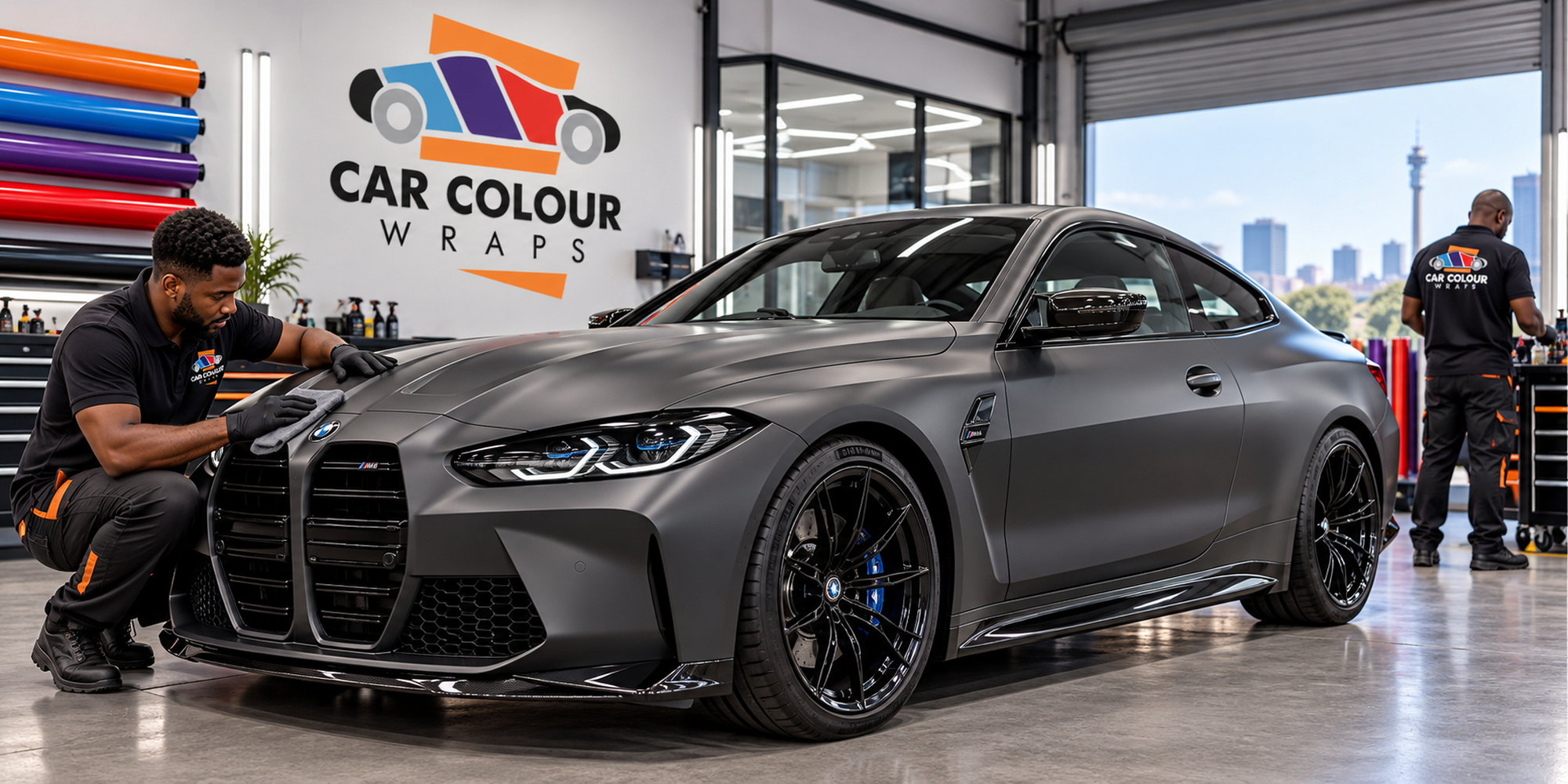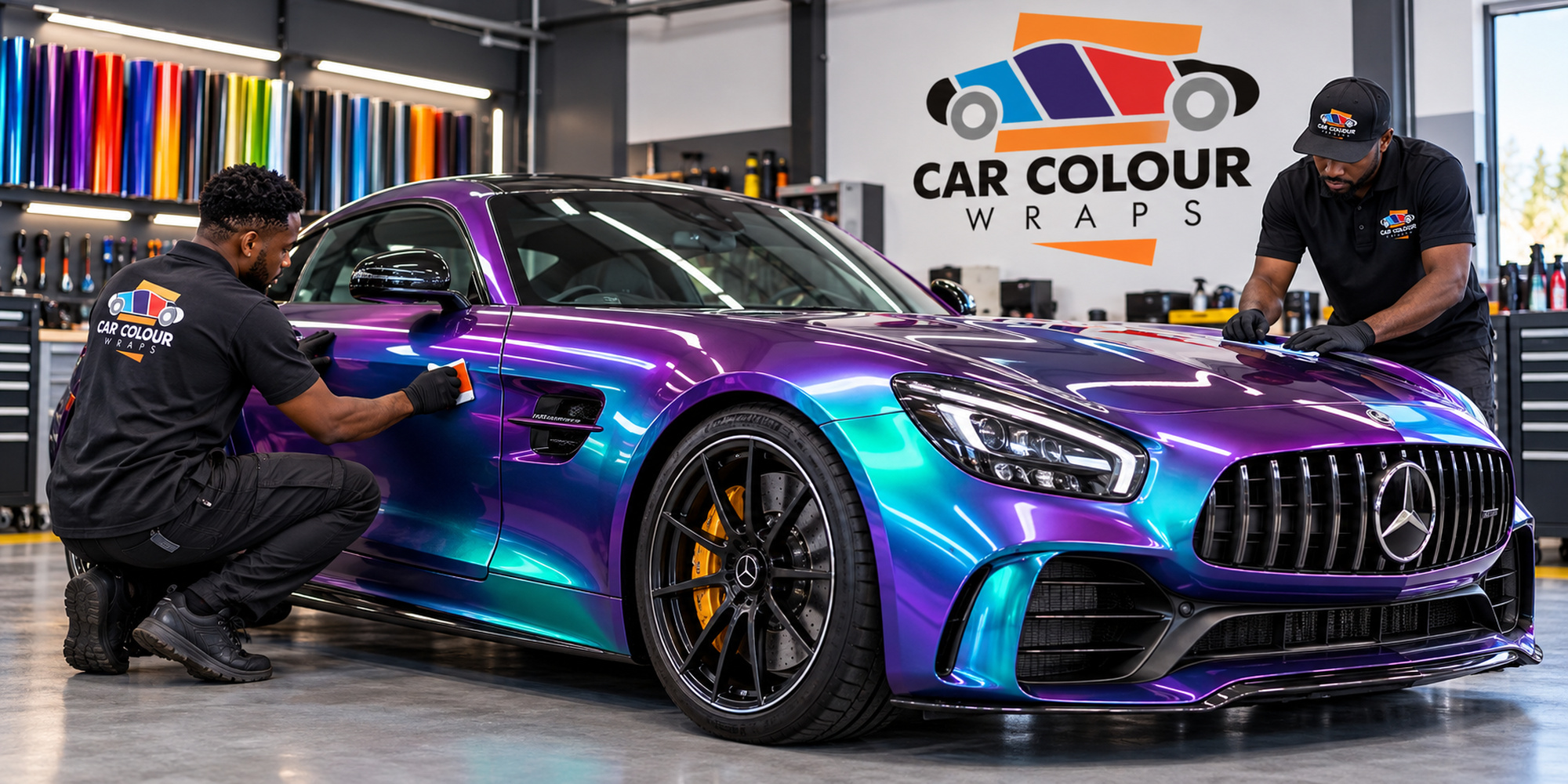
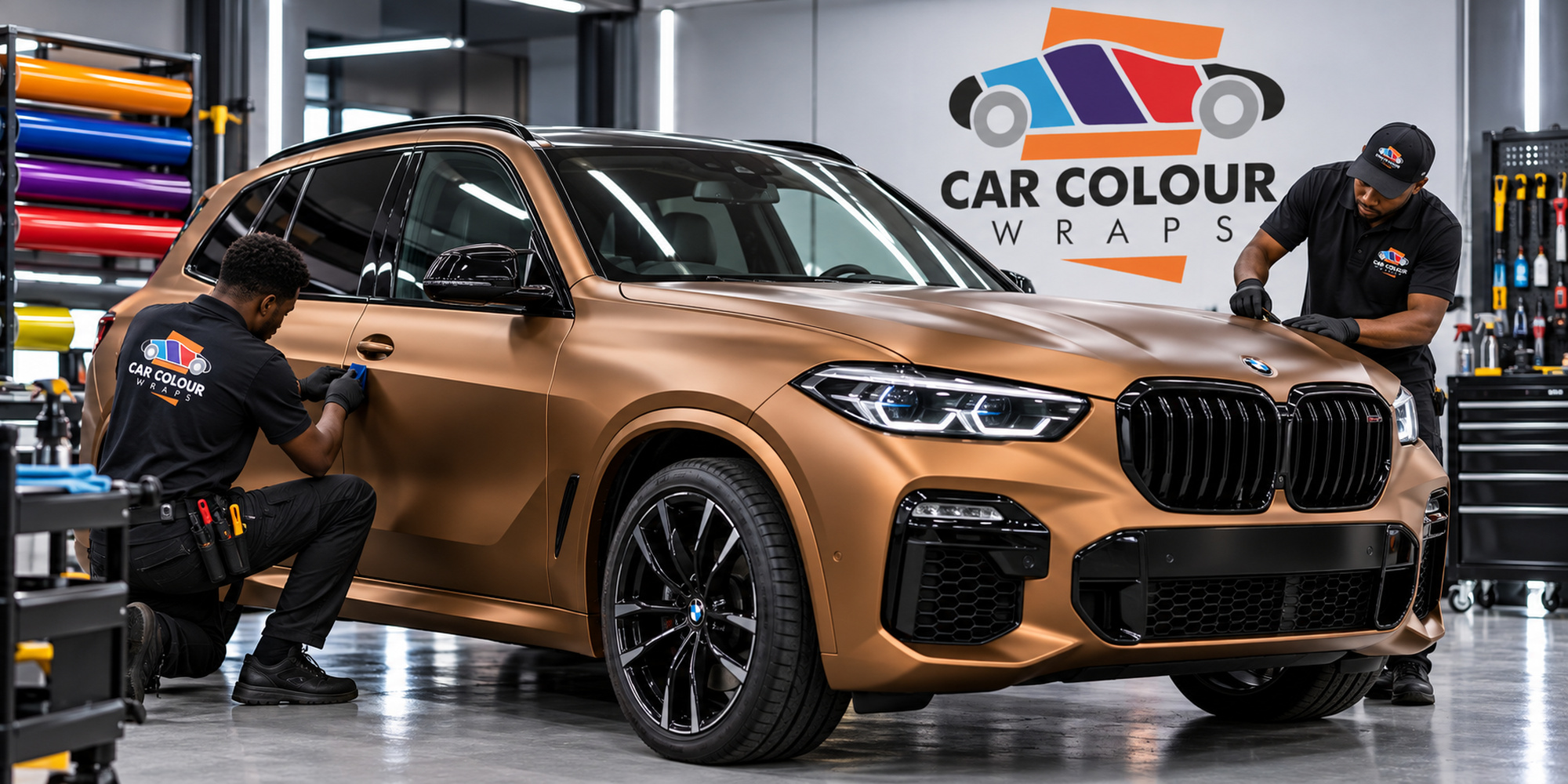
Satin vinyl has a soft sheen that sits between gloss and matte. It reflects some light, so body lines and curves are still visible, but without the mirror-like reflections of gloss.
Satin suits owners who want something more distinctive than gloss but less stark than matte. It is a popular choice for full colour changes on performance and luxury vehicles, and for subtle contrast panels.
About this service
The gentle sheen of satin picks up the shape of a car’s panels in a smooth, even way. It can make sharp creases and curves look more defined in daylight. Shallow ripples are softened compared with gloss, while chips and dents underneath will still show as surface shapes.
Satin is generally a little more forgiving of fingerprints and light marks than full matte, but it still must not be polished, waxed or buffed. Polishing creates shiny patches that break up the even sheen, and the damage is often permanent.
Satin colours can look quite different depending on the light. A satin grey can look almost silver in direct sun and darker in shade. We recommend viewing samples outside on your vehicle before deciding.
Suitable vehicles and common uses
- Full colour changes on sports cars, coupés and luxury sedans
- SUVs where a modern, understated finish is wanted
- Satin black roofs, bonnets and mirrors as contrast
- Vehicles with strong body lines that suit a soft sheen
- Owners who want a finish between gloss and matte
- Accents on bakkies, such as bonnet or roof panels
Available options
- Satin colours from neutral greys to bright shades, subject to material availability
- Satin black for trim, roofs or a full colour change
- Satin metallic and satin pearl-effect films where available
- Full wrap or selected panels
- Door jambs and shuts on full wraps, where practical
- Combination with a chrome delete for coordinated trim
Options depend on the material available at the time of your project and on your vehicle. We confirm exactly what is possible in your quotation.
Why choose it
- Highlights body lines without harsh reflections
- Softens the appearance of minor panel waviness compared with gloss
- Slightly more forgiving of fingerprints than full matte
- A distinctive finish that is difficult and costly to achieve in paint
- Removable, with the original paint underneath
Things to consider
- Must not be polished, waxed or machine buffed
- Scratches cannot be polished out and may need a panel rewrap
- Oils and bird droppings can mark the surface if left too long
- Colour appearance changes noticeably with lighting conditions
Preparation and installation process
- Outdoor sample viewing. We compare satin samples against your car outside, since satin colours shift noticeably between sun and shade.
- Paint and surface assessment. We check for chips, dents and paint issues and discuss what will show through the film.
- Preparation and disassembly. Panels are cleaned and degreased, and trim, handles or lights are removed where needed.
- Installation. Film is applied with care to avoid burnishing marks that would disturb the even sheen.
- Inspection and care briefing. We check every panel in varied light and explain satin-safe cleaning products and methods.
What affects the price
- Full or partial coverage
- Vehicle size and curve complexity
- Satin film range, including metallic or pearl-effect options
- Paint condition and preparation
- Disassembly needed
- Inclusion of door jambs and shuts
Every vehicle is different, so we quote each job individually. Your final quotation depends on the vehicle, the material, how much of the vehicle is covered, any artwork, and the condition of the paint once we have assessed it.
Turnaround
Timing depends on the coverage you choose, the size and shape of the vehicle, the film selected and how much preparation and disassembly are needed. We confirm the timing with your quote after assessing the vehicle.
Care and maintenance
- Use pH-neutral shampoos and products labelled safe for satin or matte finishes
- Do not wax, polish or use gloss-enhancing sprays
- Clean off bird droppings, insects and fuel spills promptly
- Avoid brush-type automated car washes
- Pat dry with a soft microfibre towel to avoid water spots
Frequently asked questions
What is the difference between satin and matte?
Satin has a soft sheen that reflects some light and shows body lines, while matte is flat with almost no reflection. Satin tends to show fingerprints a little less, but both need similar no-polish care.
Can I use a ceramic or wax product on satin?
Do not use wax or anything that adds gloss. Some protective products are formulated for satin and matte vinyl, but check the label and ask us before using anything new.
Does satin look different in the sun?
Yes. Satin colours can look lighter and more metallic in direct sun and deeper in shade. Viewing samples outdoors helps avoid surprises.
Is satin harder to install than gloss?
Satin needs careful handling, because pressure and friction during installation can leave shiny marks. It is not as demanding as chrome, but it does call for a gentle technique.
Will satin hide the chips on my bonnet?
No. Satin softens reflections, but chips and dents still show as small shapes under the film, and chips can affect how well the edges bond. Having chips touched up or repaired before wrapping gives a smoother finish. If chips are a recurring problem, ask us about paint protection film, which is a separate product.
Areas we serve
Customers bring their vehicles to our workshop in Rivonia, Sandton from across Gauteng. All installations take place at the workshop.